
You’ve likely seen the Berlin Bear, the colorful bears welcoming people on the streets and featured on Berlin’s coat of arms. However, the story of how the bear became linked to Berlin remains a mystery
The connection between Berlin and bears is a centuries-old mystery. There are no wild bears in the city or nearby, except for the colorful ‘Buddy Bear’ sculptures found on the streets, in souvenir shops, and the bears at the zoo.
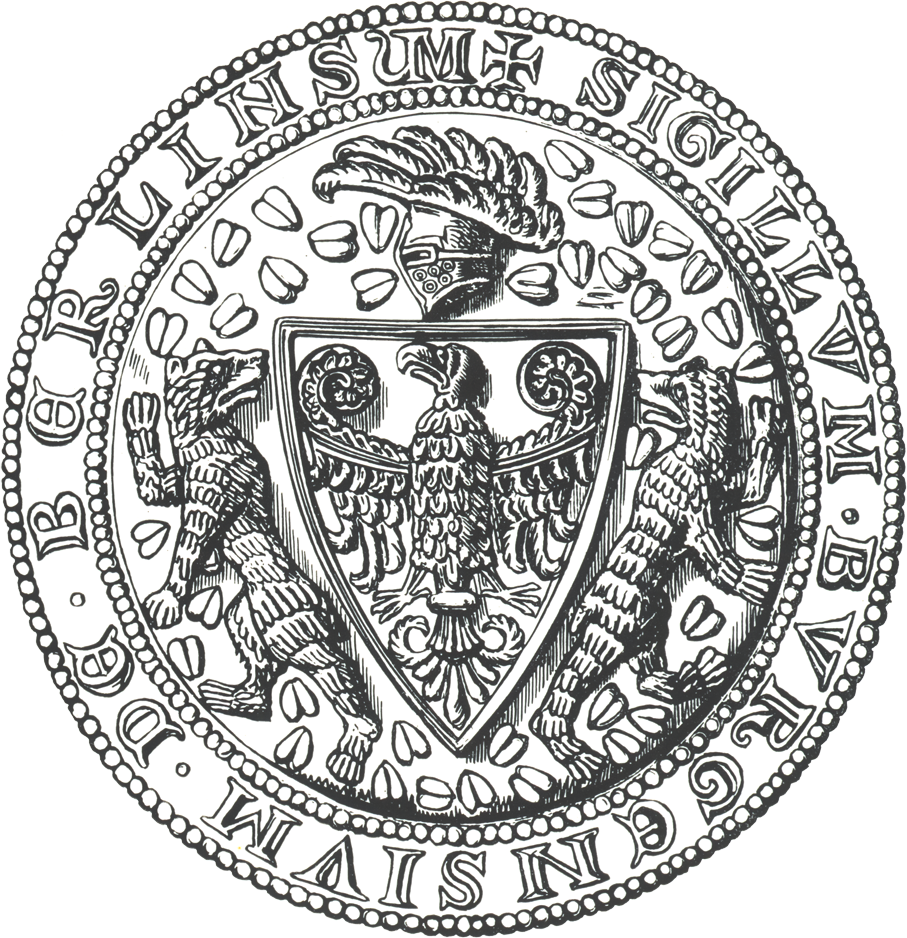
The bear makes its first appearance in Berlin’s history in 1280, featured on a seal. This seal is decorated with hearts and prominently displays the Brandenburg eagle at its center. Flanking the eagle are two armed bears, each standing with one paw raised.
Scholars and heraldists offer varying interpretations of these bears. Some identify them as two black bears, while others describe them as a black bear paired with a brown bear.
The Origins of the Bear in Berlin
This is where the mystery begins. Over 700 years have passed since 1280, and no records from that time explain the bear’s origins. All we have are guesses.
Albrecht the First, known as Albrecht the Bear, was the founder of the Brandenburg Marches and played a key role in expanding Brandenburg. His nickname, “the Bear,” is often cited as one explanation for the association with bears.
But there may be another explanation for why the two bears ended up on the seal.
Seals and coats of arms are crafted by heraldists, who frequently incorporate symbols into the design to represent the city’s name and significance.
Are there bears in Berlin?
The closest we get to bears in Berlin are raccoons. Actually, raccoons are not bears at all, as they belong to a completely different family. But in German, a raccoon is called a Waschbär, which literally translates as “washing bear.” However, there are no real bears living in Berlin or the surrounding area.
This suggests that the bear might be a centuries-old error. It’s possible the heraldist believed the name Berlin came from the Middle High German word Bärlein.
The term Bärlein translates to “little bear,” but this is where the misunderstanding arises.
Berlin is a name of Slavic origin, much like numerous other cities in eastern Germany, such as Schwerin, Prenzlau, Bernau, and Rathenow.
Berlin should therefore not be translated as ‘little bear’. Berlin means ‘swamp’, as the city is located in the marshlands of Brandenburg. The city is built on wet, sandy soil.
What is the Berlin Bear?
Berlin has retained the bear as both its emblem and mascot, embracing its charm over the less appealing connotations of a swamp.

The vibrant bear statues scattered across the city are known as Buddy Bears. Introduced to Berlin in 2002, they were the brainchild of Eva and Klaus Herlitz, who envisioned bringing art to urban spaces, starting with the German capital.
Over 100 Buddy Bears crafted by various artists can be found throughout Berlin. The original bear, created by Roman Strobl, became an instant hit, inspiring a wide range of miniature versions now popular in souvenir shops.
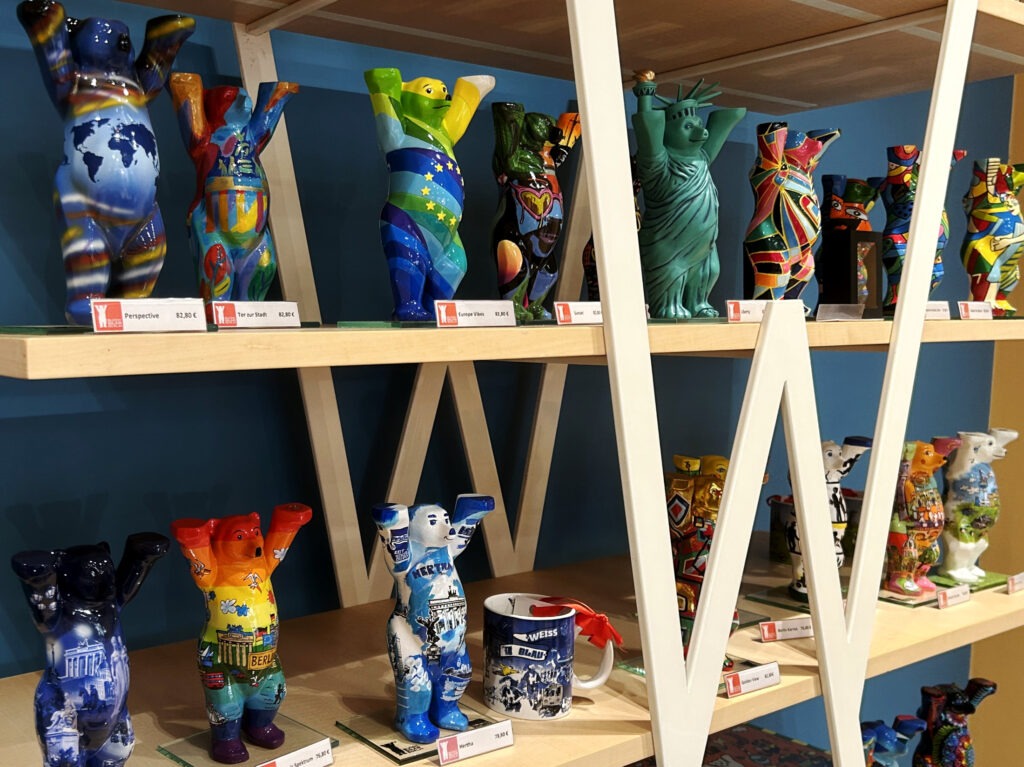
Photo by Chrissie Sternschnuppe@flickr. CC BY-SA.
Which Buddy Bear in Berlin is your favorite? Let us know in the comments below.
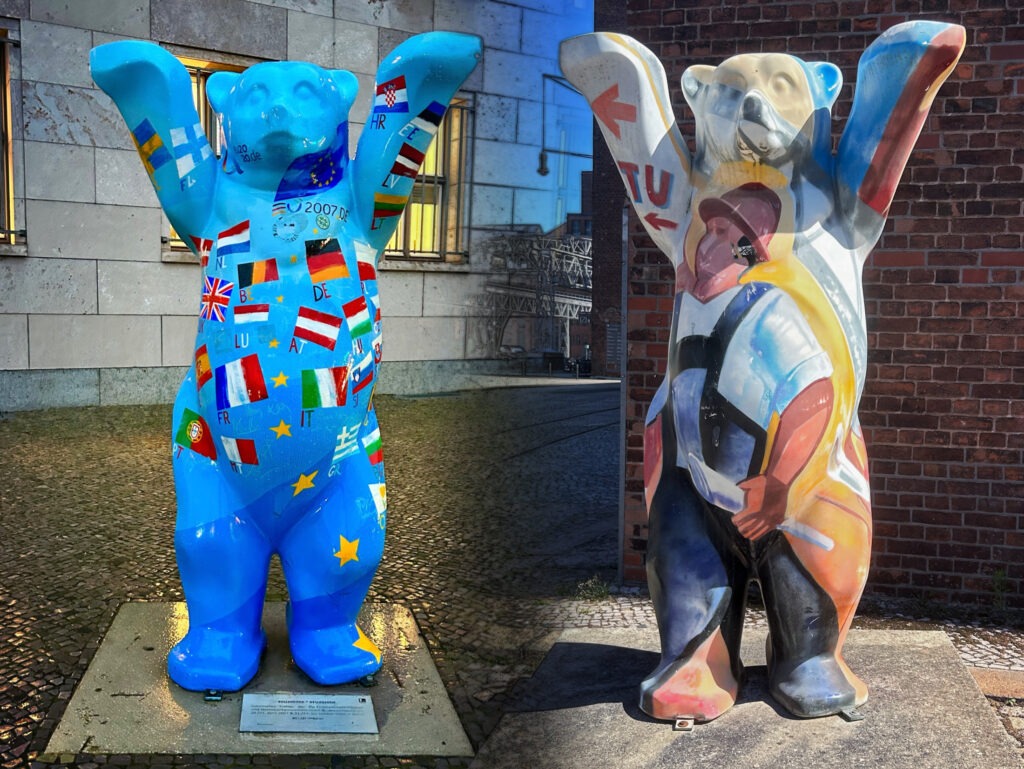
Photo by Chrissie Sternschnuppe@flickr. CC BY-SA.
Related articles
Soviet War Memorials in and around Berlin
LGBT+ Memorials in Berlin to Visit During Pride Month