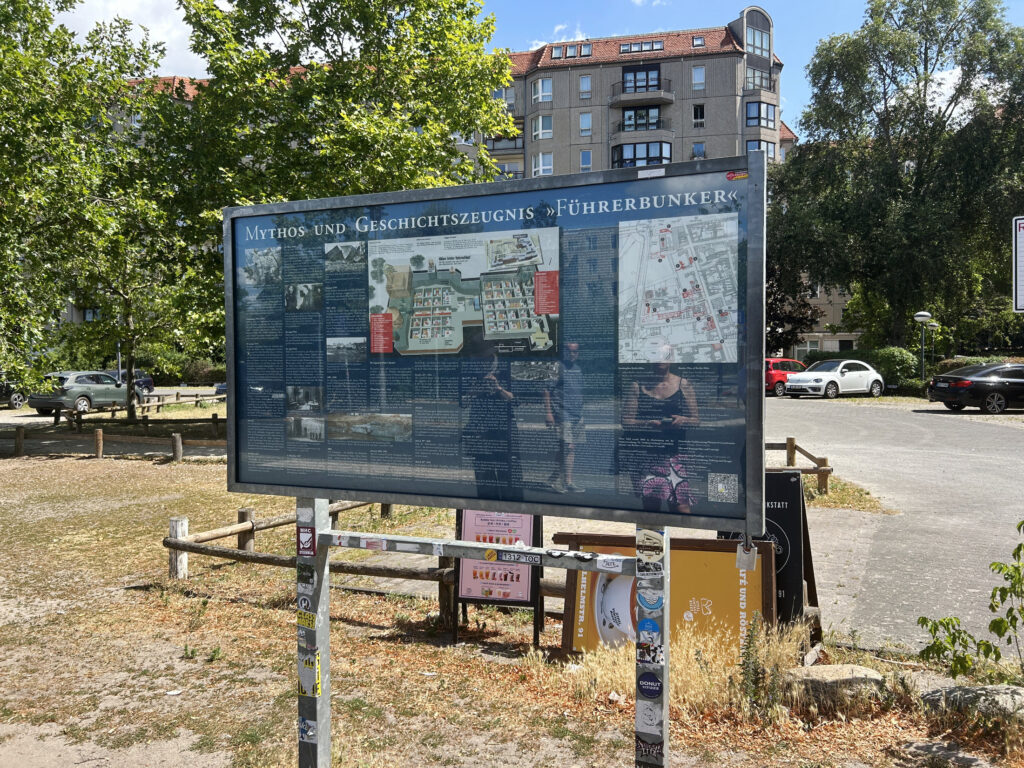
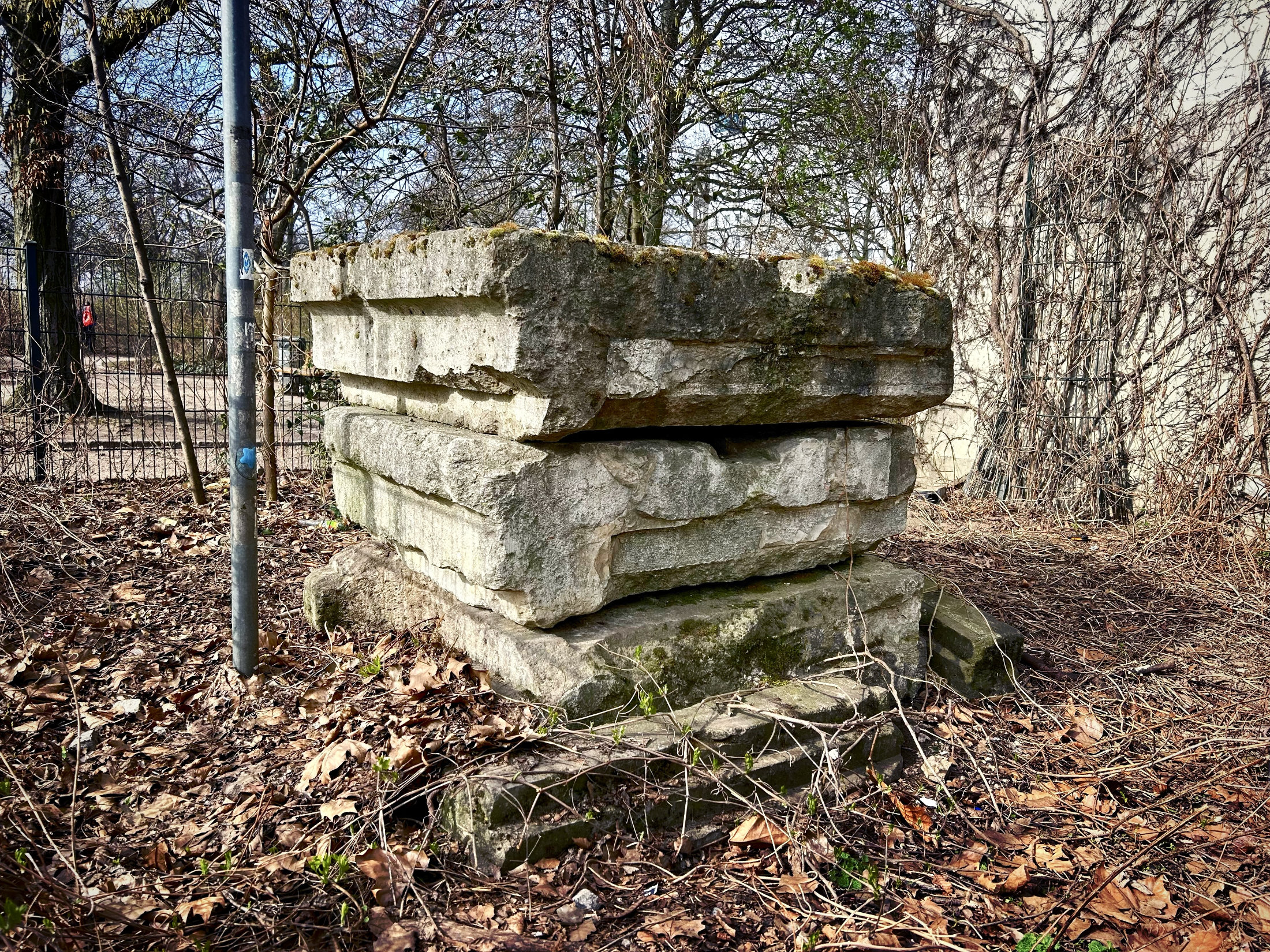
The New Chancellery was demolished after the war, but fragments of the building resurfaced in 2008. They, too, are now gone
In 1938, Adolf Hitler orderd the construction of the New Reich Chancellery to serve as his official residence. Designed by the Nazi regime’s chief architect, Albert Speer, the New Reich Chancellery was intended to embody Germany’s power and glory.
The construction lasted two years, resulting in a 427-meter-long impressive building along Voßstraße in the government district.
The building complex was designed in the distinctive style of National Socialist architecture. At its heart lay the lavish “Diplomats’ Route,” a grand 300-meter corridor stretching from the Court of Honor, through a vestibule, several opulent halls, and the Marble Gallery, before culminating in Hitler’s private study.

Unknown photographer@Bundesarchiv, Bild 146-1985-064-24A. CC BY-SA.
The Demolition of the New Reich Chancellery
However, the war left its mark on Hitler’s grandiose residence.
Allied air raids and Red Army artillery damaged the New Reich Chancellery. While it could have been repaired, the Soviet occupiers refused to preserve a such a powerful symbol of Hitler and Speer’s self-perception of power and glory.
In 1949, Hitler’s official residence was demolished and vanished from sight until its unexpected reemergence in 2008.
Hitler’s Window
While excavating the foundation for a new building at the intersection of Voßstraße and Ebertstraße, fragments of a window section from the New Reich Chancellery were unearthed.
The window shards lay symbolically collapsed on Blochplatz in the Gesundbrunnen neighborhood until 2026 as a sign of the downfall of Hitler’s Third Reich.
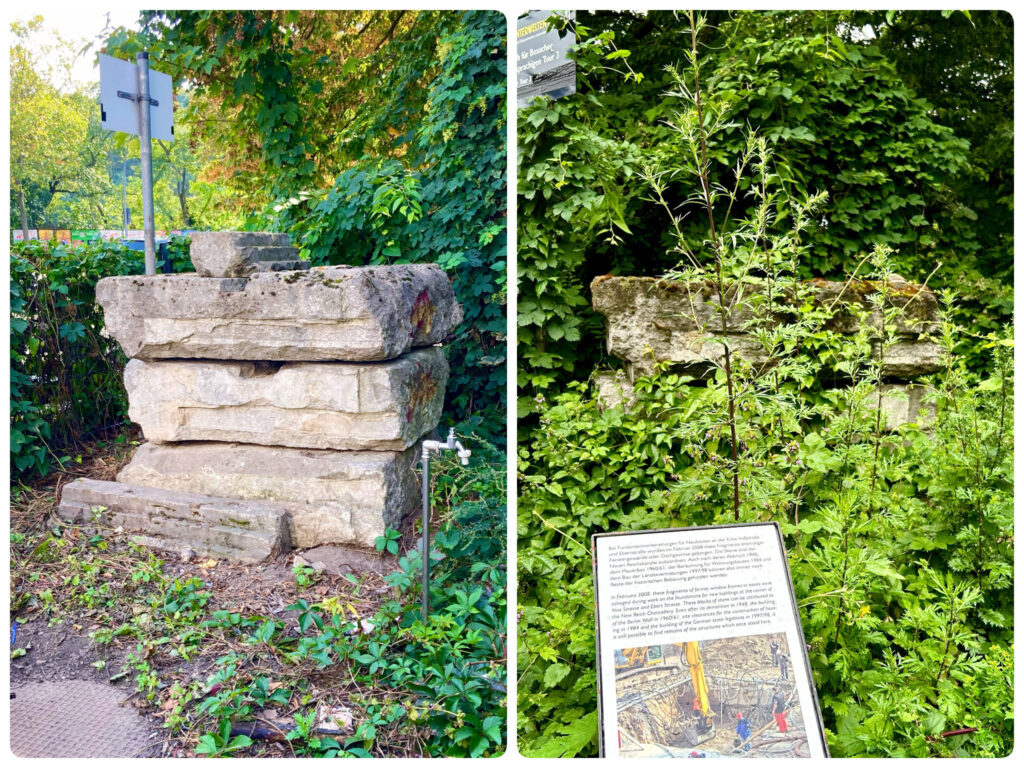
Right: In the summer, the fragments are overgrown with bushes and leaves and can be hard to spot.
Photos by Chrissie Sternschnuppe@Flickr. CC BY-SA.
It’s unclear which wing or floor of the massive building the fragments came from. However, they might have been part of one of the Führer’s private rooms and thus Hitler’s window.
The New Reich Chancellery at Anton-Wilhelm-Amo-Straße
It is rumored that marble from the New Reich Chancellery was repurposed for reconstructing the Anton-Wilhelm-Amo-Straße U-Bahn station and for building the three Soviet War Memorials in Tiergarten, Treptower Park, and Schönholzer Heide. However, this claim remains neither confirmed nor debunked.

Historical location:
Blochplatz
The corner of Badstraße and Böttkerstraße, Gesundbrunnen
Related articles
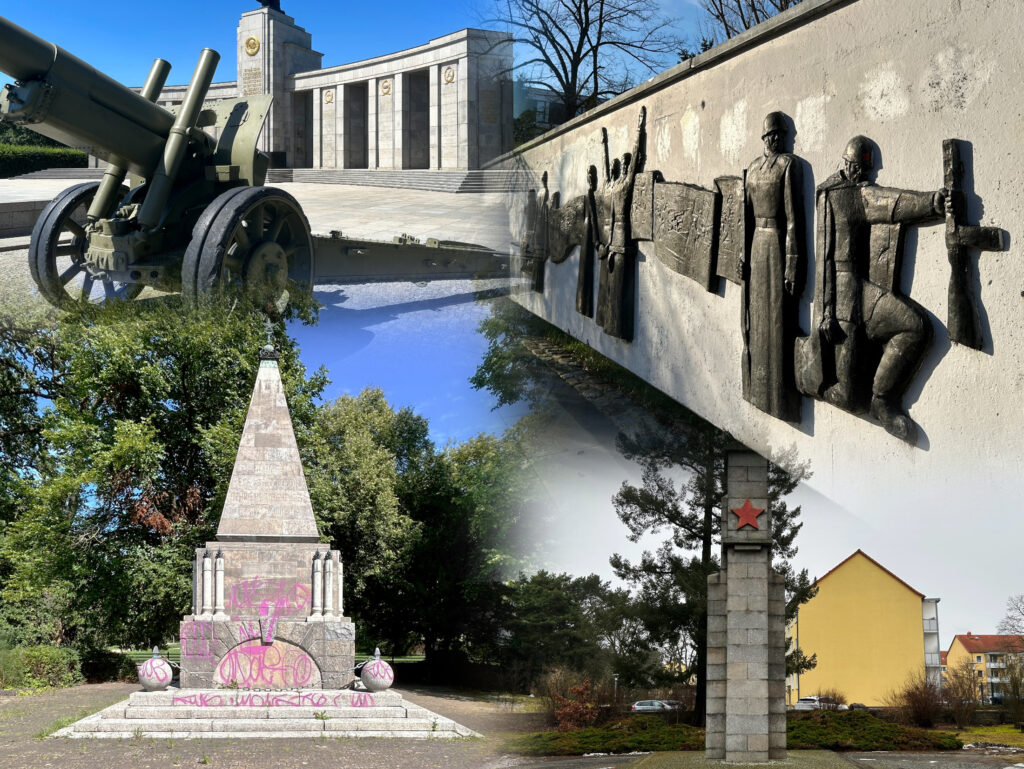
Soviet War Memorials in and around Berlin
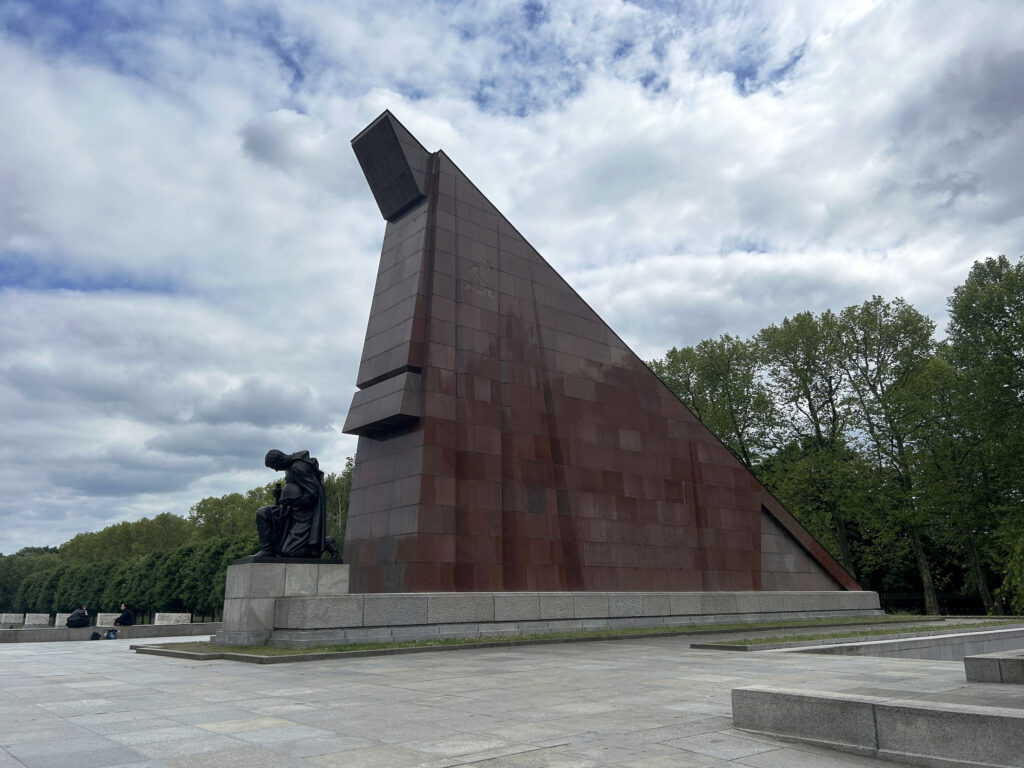
The Soviet War Memorial in Treptower Park