
Parts of the Berlin Wall remain in the city. Some are in their original locations, while others are hidden Easter eggs. Here’s how to find them
Although the Berlin Wall fell in 1989, it still stands. In some places in Berlin, parts of the wall have been preserved as a reminder of the city that divided families and cut Europe in two. Use the map to find the Berlin Wall.
The official name of the Berlin Wall was the Anti-Fascist Protection Wall, but the East German (GDR) regime actually built it to prevent East Germans from leaving the socialist republic.
Ironically, in other places, individual elements of the Berlin Wall have become advertising pillars for private businesses, exactly what the GDR regime told its people the wall was protecting them against.
Use the map to find the Berlin Wall
The Berlin Wall Trail
In many places throughout the city, there are markings on sidewalks and roads where the Berlin Wall once stood.
If you stumble across a double row of cobblestones that look unusual compared to the surroundings, this shows where the Berlin Wall once stood. In some places, there is a memorial plaque with the years 1961-1989, the time the Berlin Wall existed.
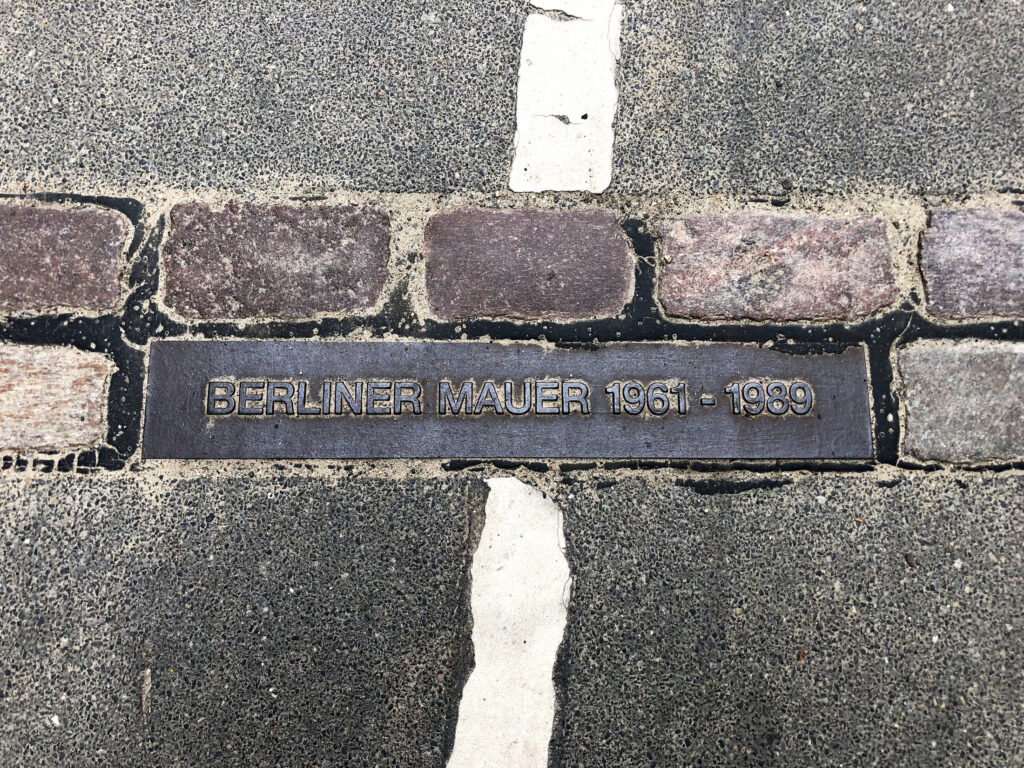
Photo by Chrissie Sternschnuppe@Flickr. CC BY-SA.
The strip of cobblestones is also called the Berlin Wall Trail or Mauerweg in German. The route is marked all around historic West Berlin, so you can follow the 160 kilometers on foot or by bike.
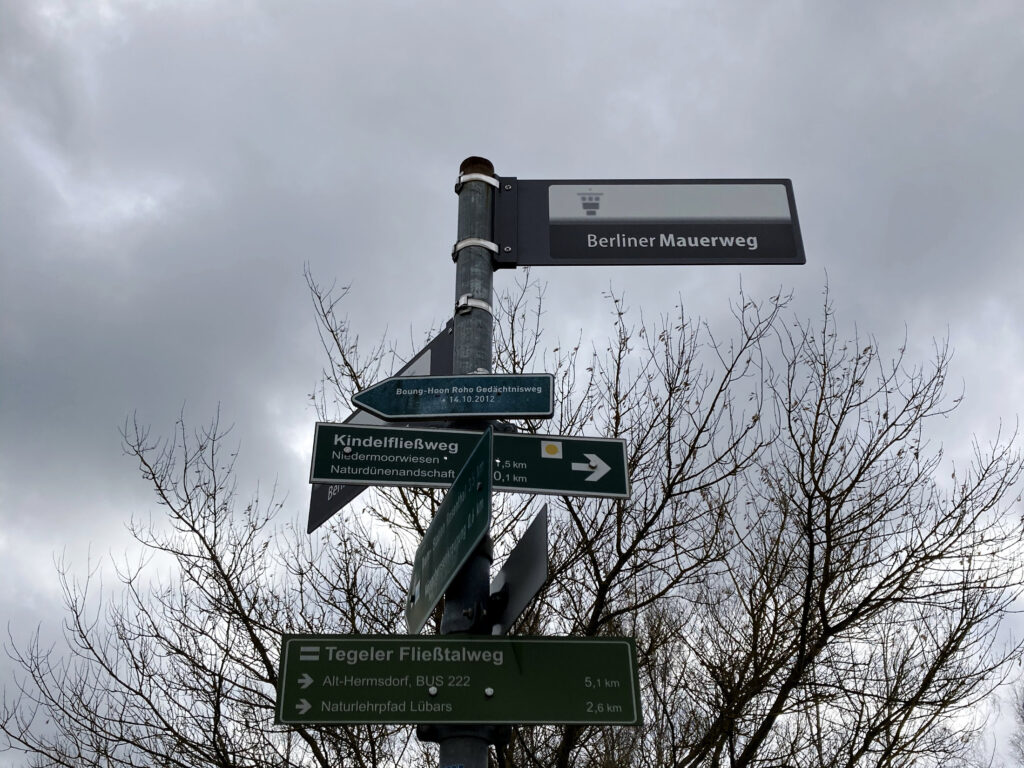
Photo by Chrissie Sternschnuppe@flickr. CC BY-SA.
East Side Gallery
Perhaps the most famous place where you can find remains of the Berlin Wall is the East Side Gallery.
It is a stretch of more than 1 kilometer along the River Spree, where the remains of the inner wall have been converted into an open-air gallery. Here, the wall is covered with 105 works of art with messages of peace and freedom.
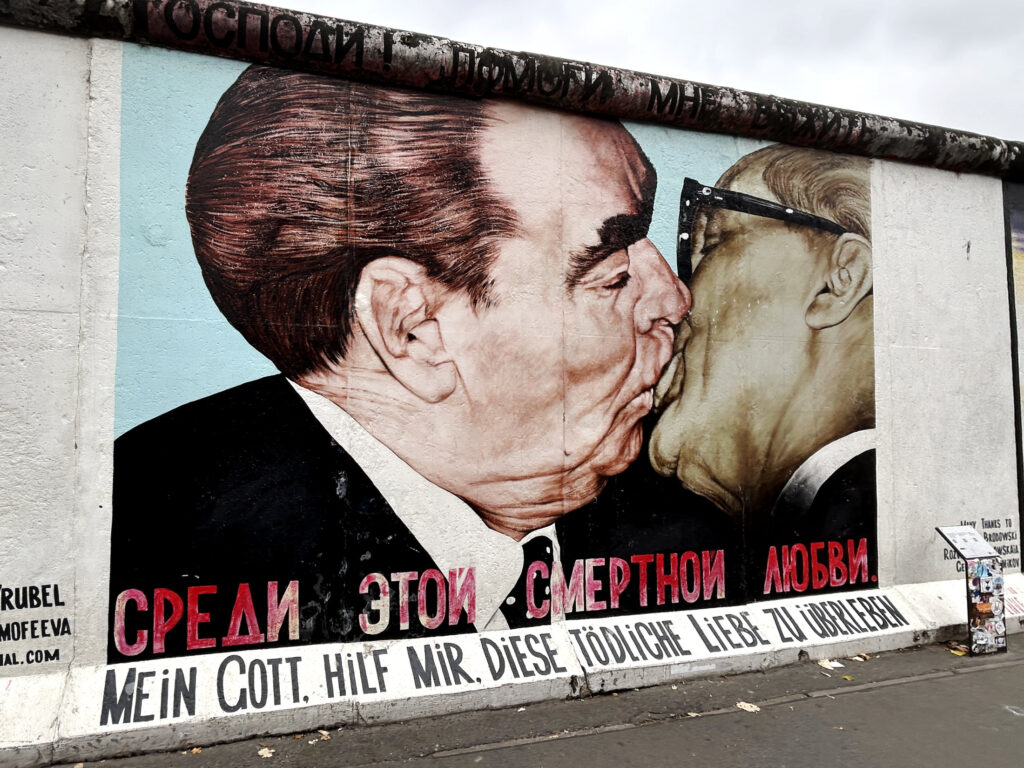
Photo by Chrissie Sternschnuppe@Flickr. CC BY-SA.
One of the paintings in particular attracts a lot of attention. It is called My God, Help Me to Survive this Deadly Love and is a rendition of a photograph of the then leaders of East Germany and the Soviet Union kissing each other.
The Berlin Wall in Mauerpark
You can also find the Berlin Wall in Mauerpark, which literally means “Wall Park”.
A section of the inner wall still stands along one side of the park, which was once part of the death strip. Today, the remains of the wall are used by graffiti artists, who decorate it daily with new works.
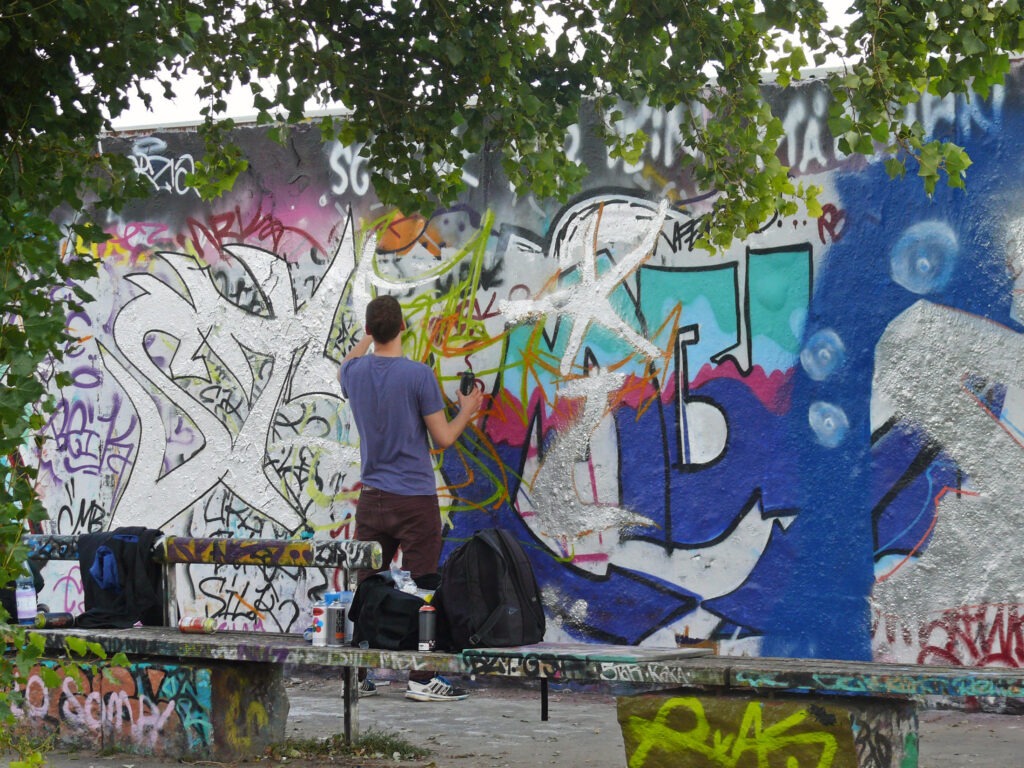
Photo by Chrissie Sternschnuppe@flickr. CC BY-SA.
The park also hosts a huge flea market every Sunday, where Berliners sell their old junk, handmade items, and souvenirs.
Read more about Mauerpark here
Platz der 9. November 1989
On the evening of November , East Berliners rushed to the border crossings into West Berlin. They had just heard on live television that the border had been opened.
Unfortunately, that wasn’t true. The secretary of the Socialist Party in East Germany had spoken out of turn during a press conference, but now it was too late.
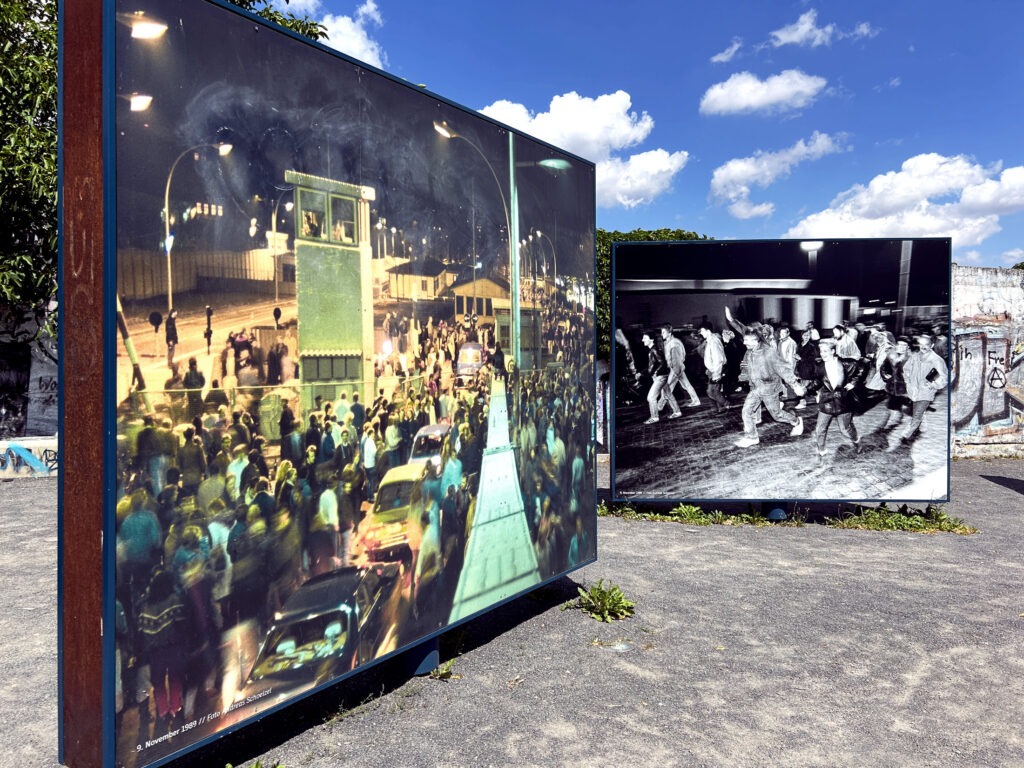
Photo by Chrissie Sternschnuppe@flickr. CC BY-SA.
Border guards were stationed at the checkpoints, and they had orders to keep the border closed. After two hours, so many East Berliners had gathered that the border guards gave up and opened the border.
The first border crossing to open was at Bornholmer Straße, and today it is a memorial. There are both remnants of the Berlin Wall and panels featuring images and text that tell the story of that historic evening.