Nazi graves spark a conflict between remembrance, legal obligations, and the desire to deny them honor. Here are two prominent Nazi graves
The culture of remembrance is put to the test when it comes to Nazi graves. Some prominent Nazis are buried in Berlin, and various laws govern how the graves are to be maintained.
We saw this particularly clearly when unknown perpetrators attempted to dig up the remains of Reinhard Heydrich in 2019. A criminal investigation was launched in an effort to find those responsible. Heydrich’s grave is just one of several Nazi graves that are causing problems.
In addition to the graves of prominent Nazis, there are also war graves where, among others, fallen SS soldiers are laid to rest.
A State Funeral and an Unmarked Grave
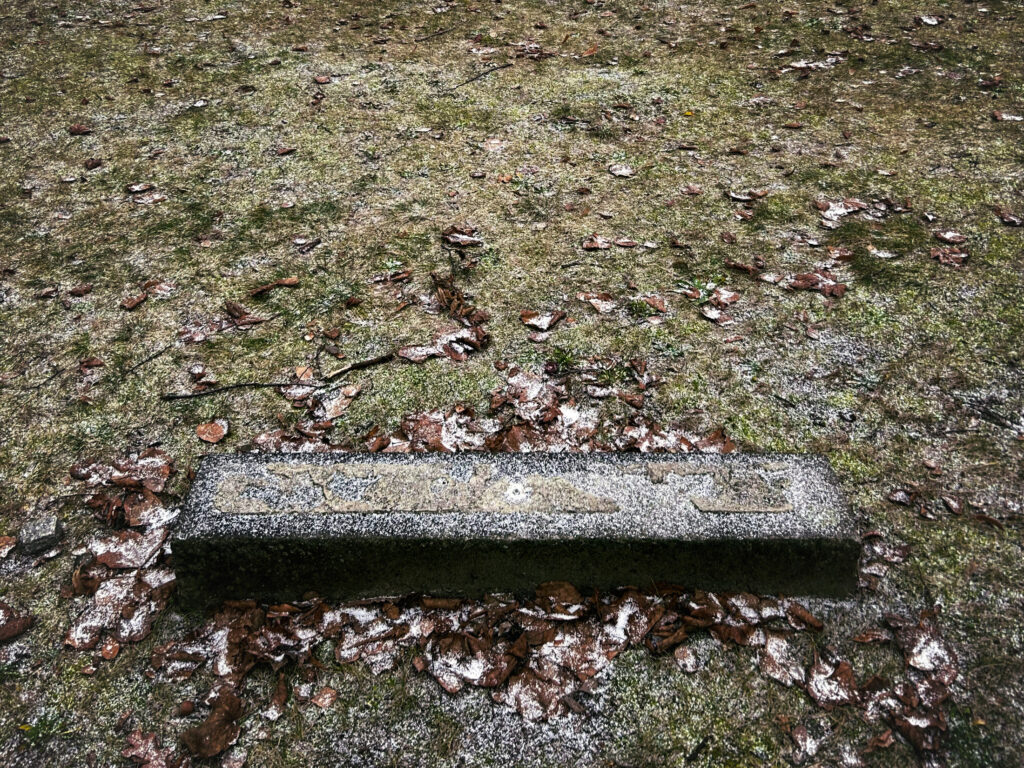
Reinhard Heydrich was the head of the Sicherheitsdienst (SD), an intelligence service under SS Minister Heinrich Himmler. Heydrich was also the initiator of the Wannsee Conference, which marked the definitive beginning of what we know today as the Holocaust.
Heydrich was assassinated in 1942 during a visit to Prague and was subsequently given a state funeral at the Invalidenfriedhof in Berlin.
Photo by Chrissie Sternschnuppe@flickr. CC BY-SA.
Why Heydrich’s Grave Isn’t a War Grave
However, Heydrich’s grave is not covered by the law on war graves. War graves are protected because fallen soldiers are regarded as victims of war and tyranny, and this includes loyal SS soldiers as well.
Since Heydrich did not die in the line of duty as a soldier, the grave is subject to the general law governing burial plots. These graves are maintained for a limited time until the family or the congregation no longer wishes to maintain them.
In this case, the congregation decided to remove the headstone after World War II to prevent the grave from becoming a gathering place for neo-Nazis.
Conversely, the grave is still protected from desecration under criminal law. For this reason, a criminal investigation was launched after an attempt was made to dig up Heydrich’s remains.
The same applies to Horst Wessel’s burial place.
The Martyr Who Became a Propaganda Tool
Horst Wessel was a young Nazi and SA leader who was shot and killed by communists in Berlin in 1930. The year before, Wessel had written new lyrics for a song that had originally been a song of the Imperial German Navy.
Although Wessel’s murder took place before Hitler came to power, Wessel was turned into a martyr by the future Minister of Propaganda, Joseph Goebbels. Goebbels also made the so-called Horst Wessel Song the official anthem of the Nazi Party.
Wessel himself was buried amid great public attention at St. Nikolai Cemetery in Berlin.
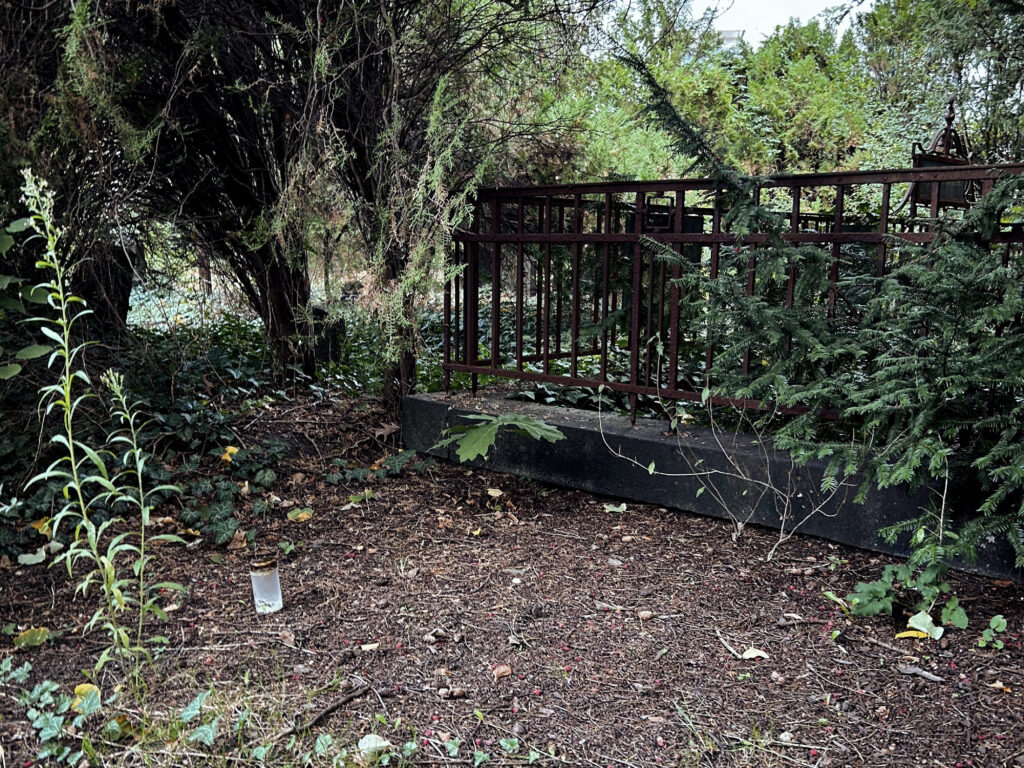
Photo by Chrissie Sternschnuppe@flickr. CC BY-SA.
Wessel’s grave has been desecrated several times. In 2002, his remains were allegedly dug up, and his skull was thrown into the Spree River. Officially, his remains are still intact in the grave, as there is no documentation that the skull ended up in the Spree.
Shortly after the war, Wessel’s grave was anonymized by the Soviet occupying forces, but remnants of the headstone remained at the site until 2013.
The Neo-Nazi Problem
Both Heydrich’s and Wessel’s graves are still visited by neo-Nazis, who lay wreaths, flowers, or place grave candles there. The authorities remove them when they discover them.
Although none of the graves are marked anymore, the Nazis still haunt the area. The dilemma is that even the graves of evil people are protected by the sanctity of the grave.
German remembrance culture is about remembering the atrocities committed by, among others, the Nazi regime. That does not mean the graves must be publicly known. Neo-Nazis, however, know exactly where the Nazi graves are and use them as memorial sites.
Where Does the Line of Evil Lie?
If we choose to completely remove the Nazi graves, we will also have to define where the line of evil lies. Is it the actions of the Nazi Regime? Is it the actions of the East German regime? Is it the actions of the last German emperor? And should we then also remove the graves associated with those people?
Related articles
Soviet War Memorials in and around Berlin

Stolperstein: Who Is Käte Rogalli?
Where Can I Find the Berlin Wall?

Bebelplatz, the Place of the Book Burnings
The Berlin Wall at the Divided Underworld