
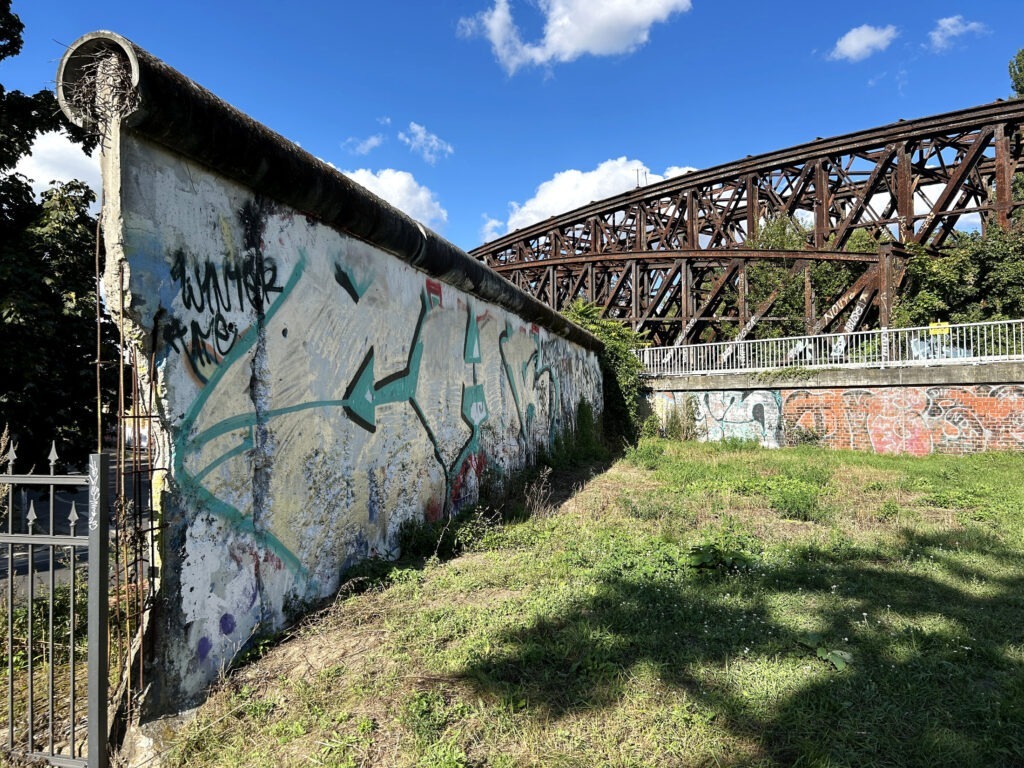
The Berlin Wall affected not only living Berliners but also the dead. The story about the divided underworld is told at the St. Hedwig Cemetery
The Berlin Wall not only cut through the general cityscape during the 28 years that Berlin was divided. The wall also divided several graves in cemeteries. Along Liesenstraße, the underworld of three entire cemeteries was divided.
Today, several of the prominent graves that were either moved or removed are commemorated in an outdoor exhibition at one of the cemeteries, under the title Divided Underworld or Geteilte Unterwelt in German.
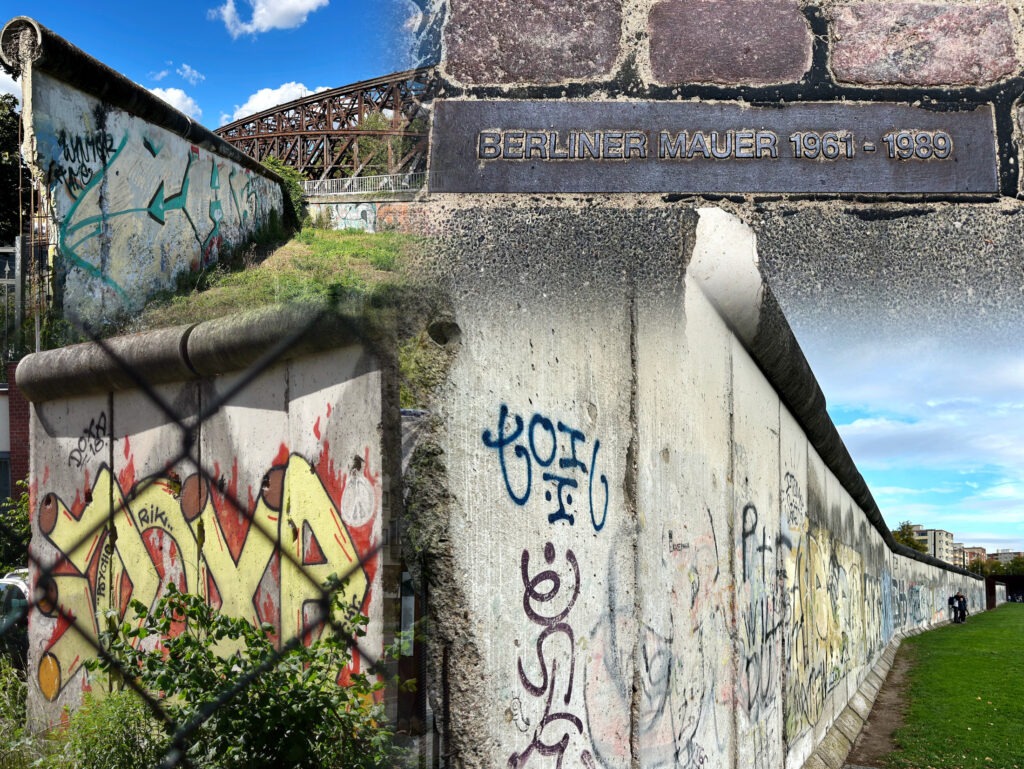
At St. Hedwig Cemetery I, more and more elements of the border wall remain standing. In the grass between the wall and the railway, 17 panels have been erected to remind us how the 40-meter-wide death strip destroyed the graves in the three cemeteries.
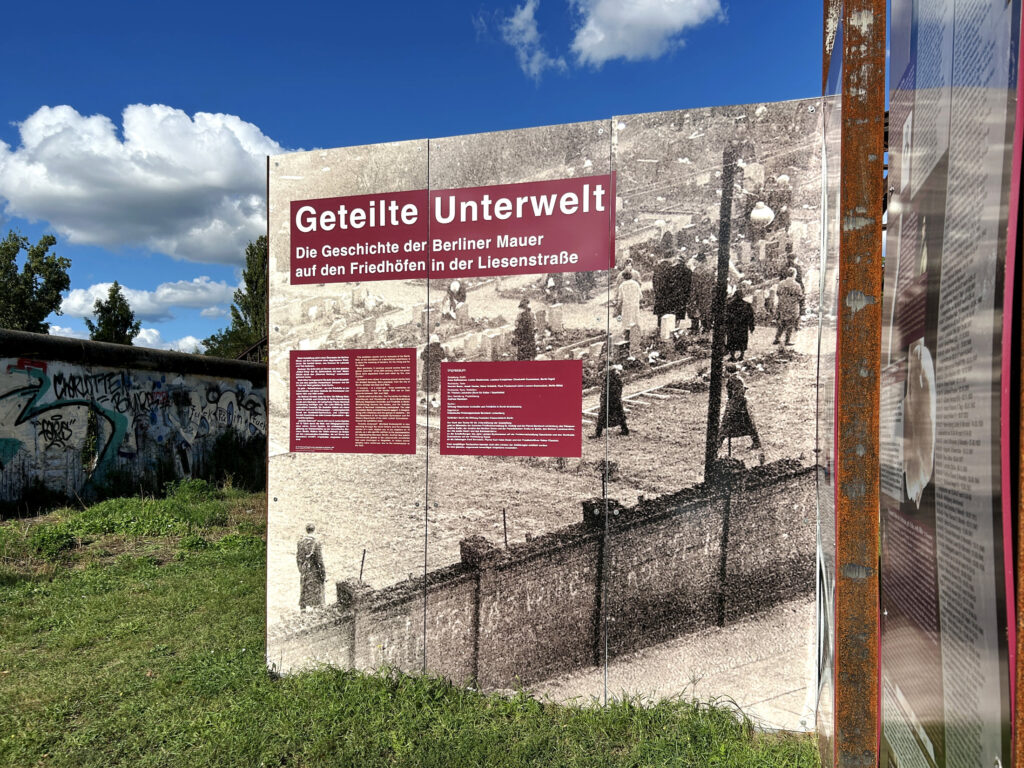
Photo by Chrissie Sternschnuppe@Flickr. CC BY-SA.
It was particularly in the early 1980s, when the death strip was to be expanded, that the graves disappeared. If the grave had not expired, the relatives could have the remains handed over for reburial elsewhere. However, most of the graves disappeared forever.
The 17 panels contain both images and archive material from Berlin’s state archives, church congregations, and private archives.
Among other things, they tell the stories of how Countess Lichtenau’s grave disappeared. She was confidante and mistress of the Prussian King Friedrich Wilhelm II. The grave of art collector and diplomat Count Raczynski also disappeared.
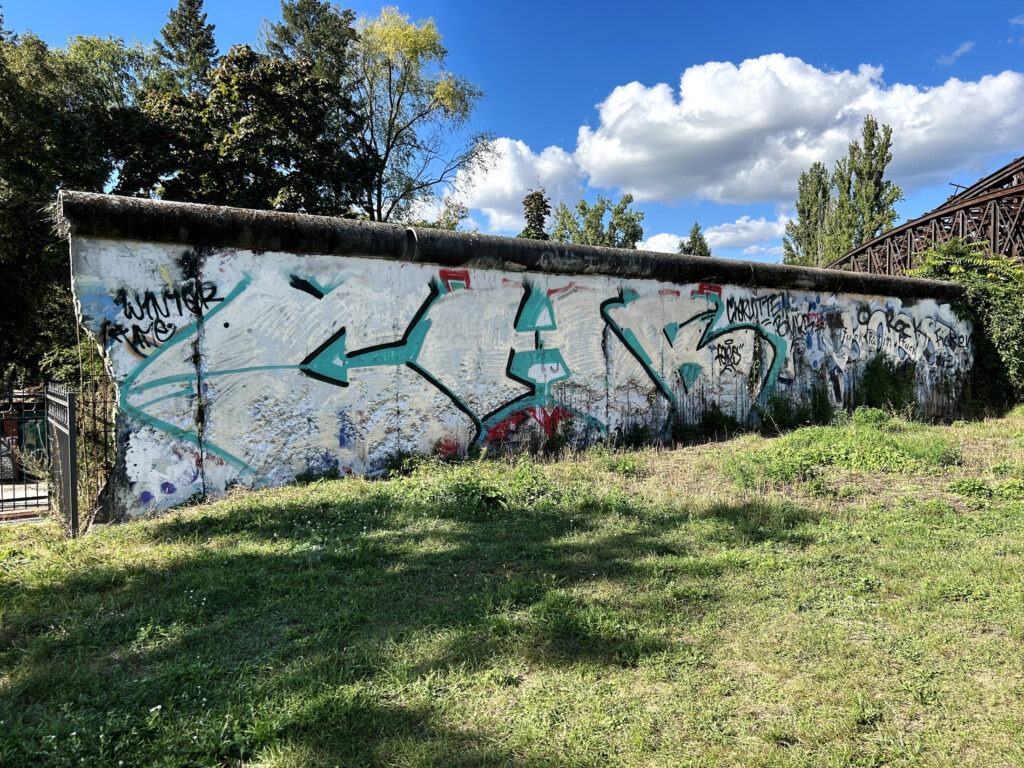
Photo by Chrissie Sternschnuppe@Flickr. CC BY-SA.
Of course, there are also passages about the Berlin Wall and its significance for Berliners. There is also a story about some of the other cemeteries in the city that were damaged by the Cold War policy of dividing the city with a wall for 28 years.
Location:
Liesenstraße 8
10115 Berlin
Family friendly: Yes
Price: Free
Experiences nearby
Related articles
Soviet War Memorials in and around Berlin
Where Can I Find the Berlin Wall?