Berlin is full of LGBT+ memorials. Here is a list of memorials worth visiting during Pride Month leading up to Christopher Street Day
Berlin has over 100 years of LGBT+ history, and it’s Pride Month. If you’re already getting ready for Christopher Street Day, here are a number of LGBT+ memorials to help you remember that history.
The LGBT+ memorials can be found all over the city. Some are more striking than others, but if you look around, you’ll spot them.
Memorial to Homosexuals Persecuted Under Nazism

Memorial to Homosexuals
Persecuted Under Nazism
Between and homosexuals were convicted in Nazi Germany. Between and of them were sent to concentration camps, where just over half perished.
Gay men wore an inverted pink triangle on their prison uniforms in the concentration camps. Lesbians were given an inverted black triangle on their prison uniforms.
This memorial in Tiergarten commemorates the LGBT+ people who were persecuted in Nazi Germany.
Read about the Memorial to Homosexuals Persecuted Under Nazism
The Pink Triangle Memorial
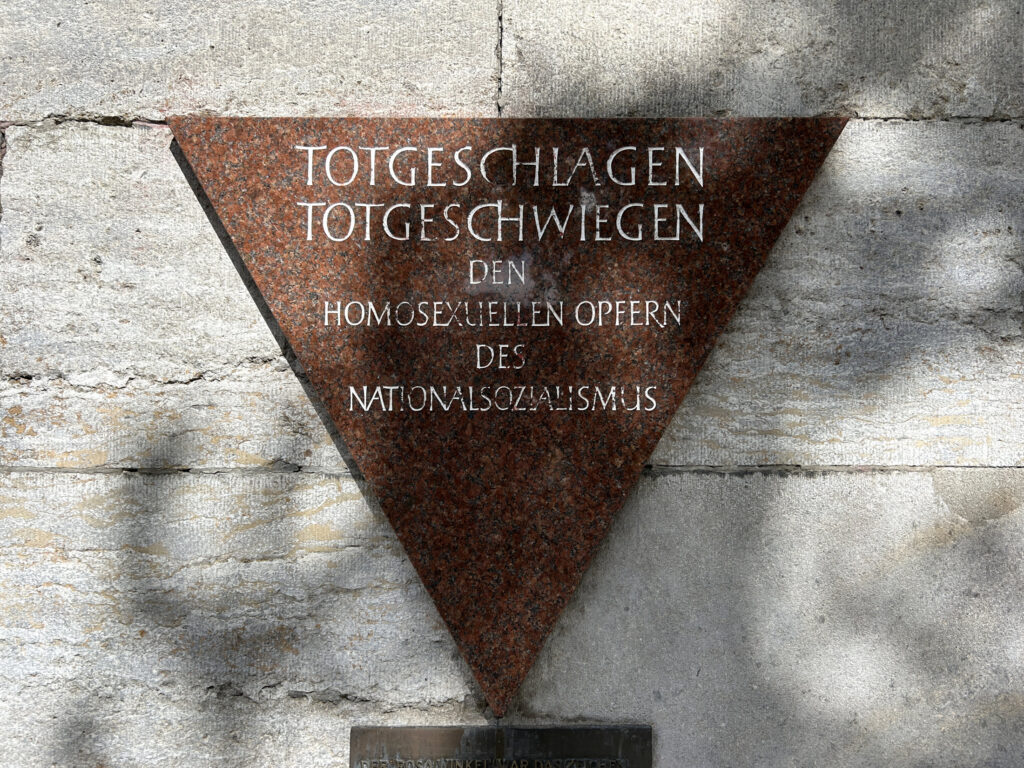
The Pink Triangle Memorial
The Pink Triangle Memorial at Nollendorfplatz is a reference to the gay men who were sent to concentration camps under Nazi Germany. Gay men had an inverted pink triangle sewn onto their prison uniforms.
But the symbol is more than that. It also refers to the gay men who, after the war, continued to be persecuted under Paragraph 175, which prohibited men from having sex with one another.
The text on the memorial reads: TOTGESCHLAGEN TOTGESCHWIEGEN which means beaten to death, silenced to death.
Read about the Pink Triangle Memorial
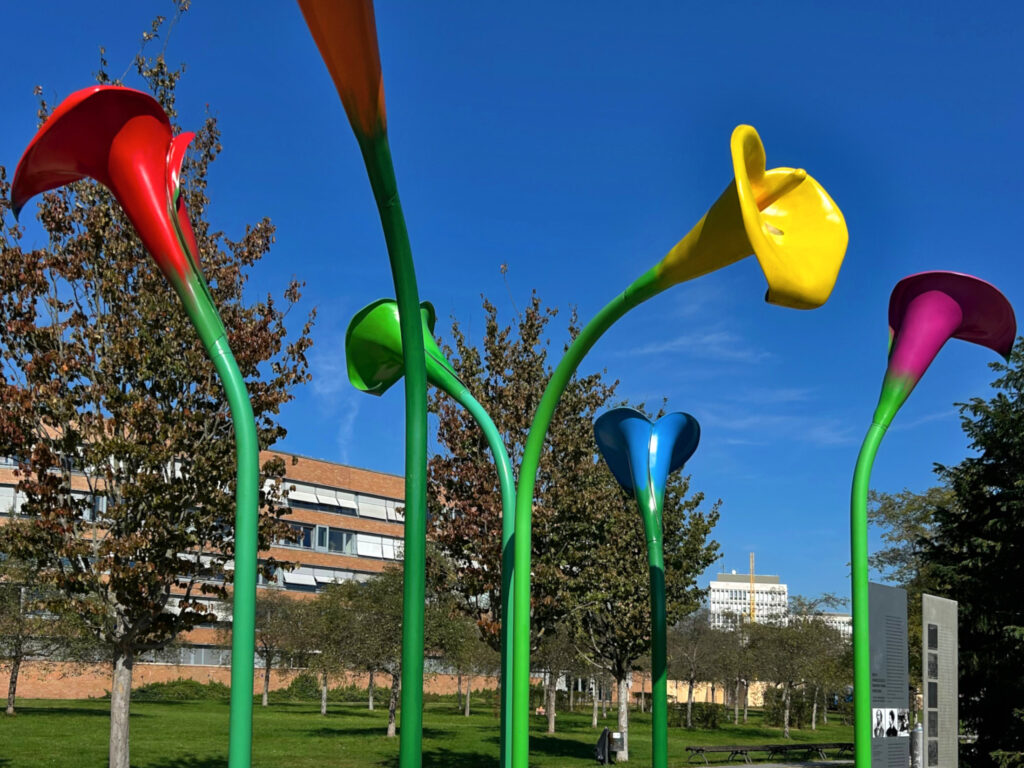
Memorial to the First Homosexual Emancipation Movement
The First Homosexual
Emancipation Movement
The Wissenschaftlich-humanitäres Komitee (Scientific-Humanitarian Committee) was established in 1897 in Berlin by Magnus Hirschfeld. The committee aimed to end the persecution of gay individuals and to promote social recognition and rights for gays, lesbians, and transgender people.
The Memorial to the First Homosexual Emancipation Movement, located at Magnus-Hirschfeld-Ufer, features six calla lilies, each representing a color of the Pride rainbow.
The calla lily is unique because a single plant contains both male and female flowers, symbolizing the unity of gender and sexuality in nature.
Read about the Memorial to the First Homosexual Emancipation Movement
The AIDS Memorial Against Oblivion
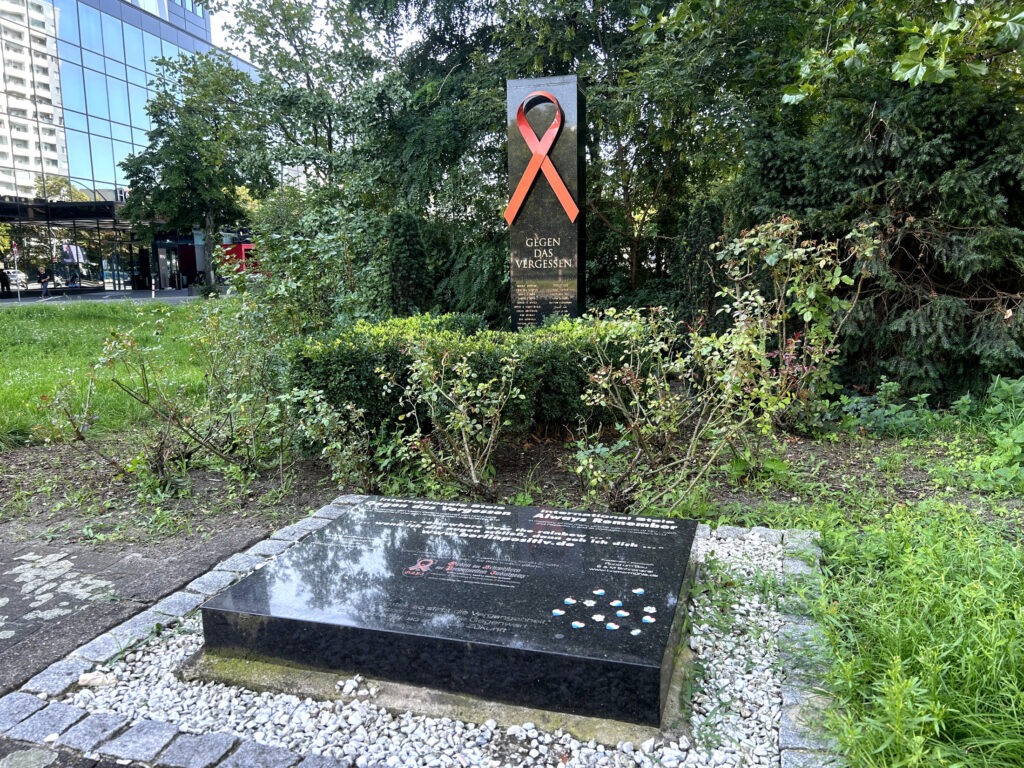
The AIDS Memorial
Against Oblivion
Located at the Urania intersection, stands the AIDS Memorial Stele. The stele bears the inscription ‘AGAINST OBLIVION’ in 22 different languages.
It serves as a reminder that HIV is still a threat and can infect anyone regardless of sexual orientation, religion, or ethnicity.
The AIDS memorial stele is also a memorial against stigmatization and exclusion and for diversity and acceptance.
Read about the AIDS Memorial Stele Against Oblivion
Bebelplatz

Bebelplatz
A May night in 1933, the infamous book burnings occurred at the center of Bebelplatz.
A large portion of the books that were burned came from Magnus Hirschfeld’s library. These were books containing Hirschfeld’s groundbreaking research on gender and sexuality, particularly homosexuality and transgender issues.
At that time, the square was called Opernplatz. After World War II, it was renamed in honor of the Social Democrat August Bebel, who had fought to repeal Section 175, which prohibited men from having sex with one another.
Käte Rogalli Stolperstein

Käte Rogalli Stolperstein
Käte Rogalli is the first transgender person honored with a stumbling stone, a so-called Stolperstein, bearing her true name. The stumbling stone is placed in front of her former residence on Hagelberger Straße in Kreuzberg.
In 1926, Käte received a transvestite certificate, which also allowed her to officially change her birth name with the authorities. In 1936, the Gestapo arrested her for wearing women’s clothes, took away her transvestite certificate.
She ended up in the infamous Wittenauer Heilstätten clinic in 1941, and two years later, she was said to have died by suicide, reportedly hanging herself in a bathroom due to the hopelessness of ever being released.
Christopher Isherwood Memorial Plaque
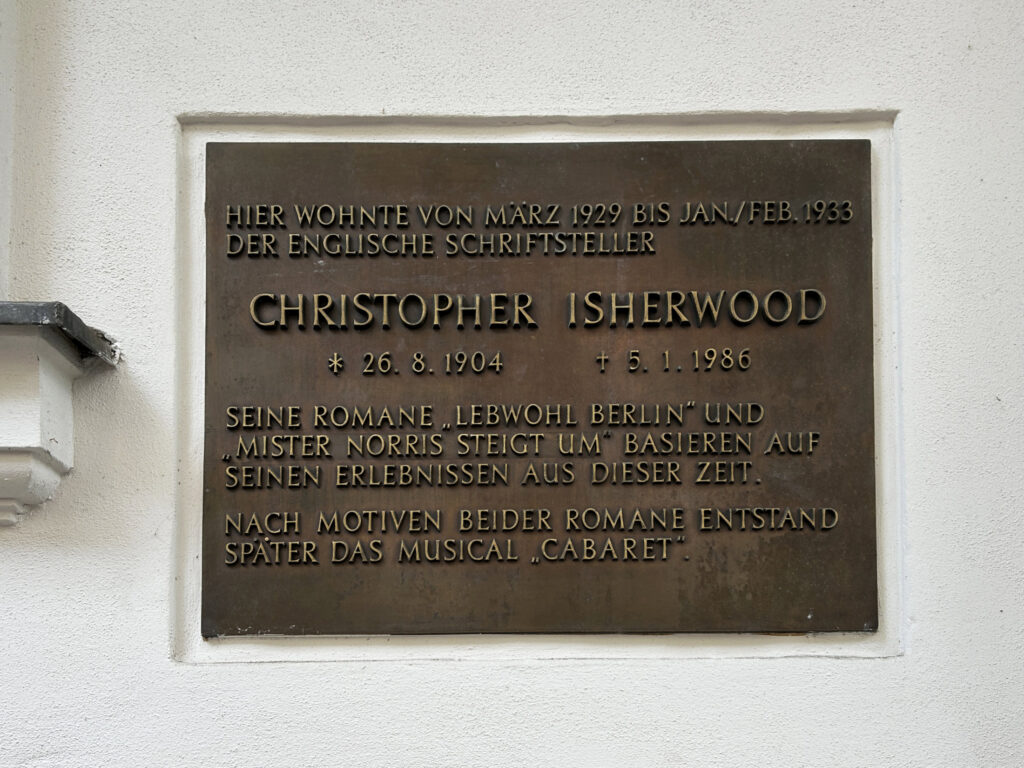
Christopher Isherwood
Memorial Plaque
During the four years that British author Christopher Isherwood lived in Berlin, he wrote his most famous book. “Goodbye to Berlin” was later adapted into the musical “Cabaret” about the people in the fictional nightclub Kit Kat Klub.
Christopher Isherwood was gay, and the characters he writes about in the book are part of the sexually liberated Weimar Republic scene, for better or worse.
In the musical version of “Cabaret,” the fictional Kit Kat Klub is most likely a reference to the Eldorado nightclub, which was located just around the corner from where Isherwood lived.
Read about the Christopher Isherwood memorial plaque
Related articles
Memorial to The First Gay Rights Organization
The Gay Victims Memorial in Tiergarten