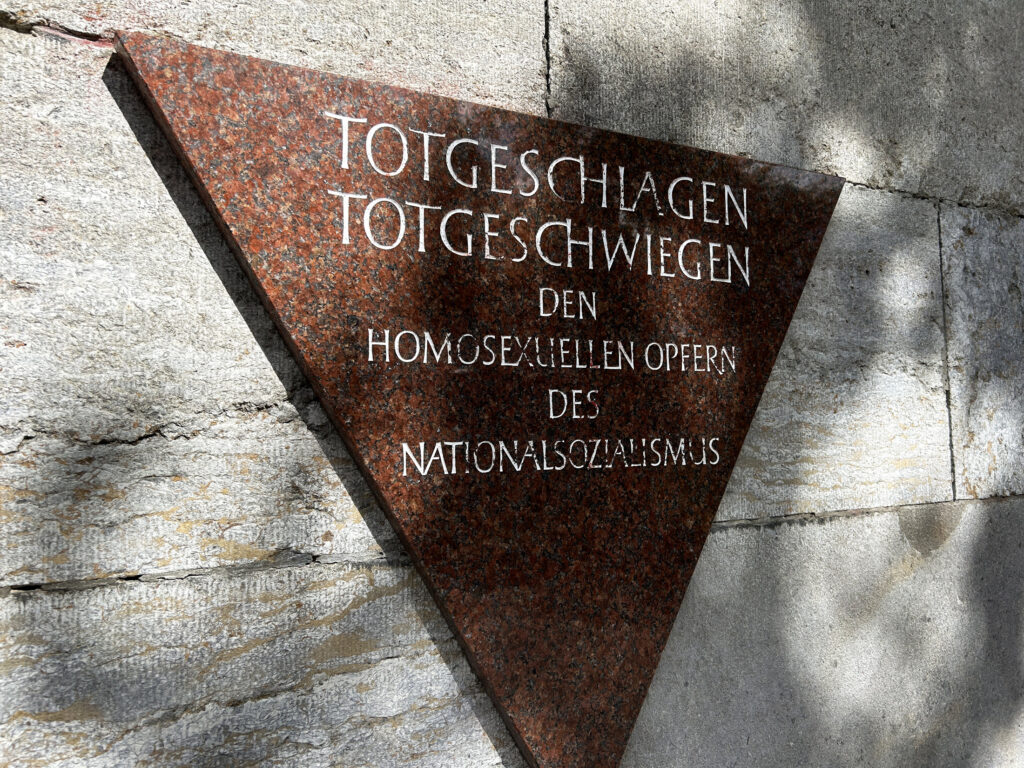
The pink triangle memorial at Nollendorfplatz is one of the first to honor gay people persecuted in Germany from 1933 to 1945
Since 1982, the inverted triangle has been located in the heart of Regenbogenkiez, Berlin’s LGBT+ district, commemorating the gay and lesbian victims of Nazi Germany. The pink triangle memorial at Nollendorfplatz is thus one of the first of its kind.
The location of the pink triangle memorial in Regenbogenkiez, Berlin’s LGBTQ+ district for more than 100 years, is no coincidence. This is where the persecution of gays and lesbians began, and this is where freedom lives on today.
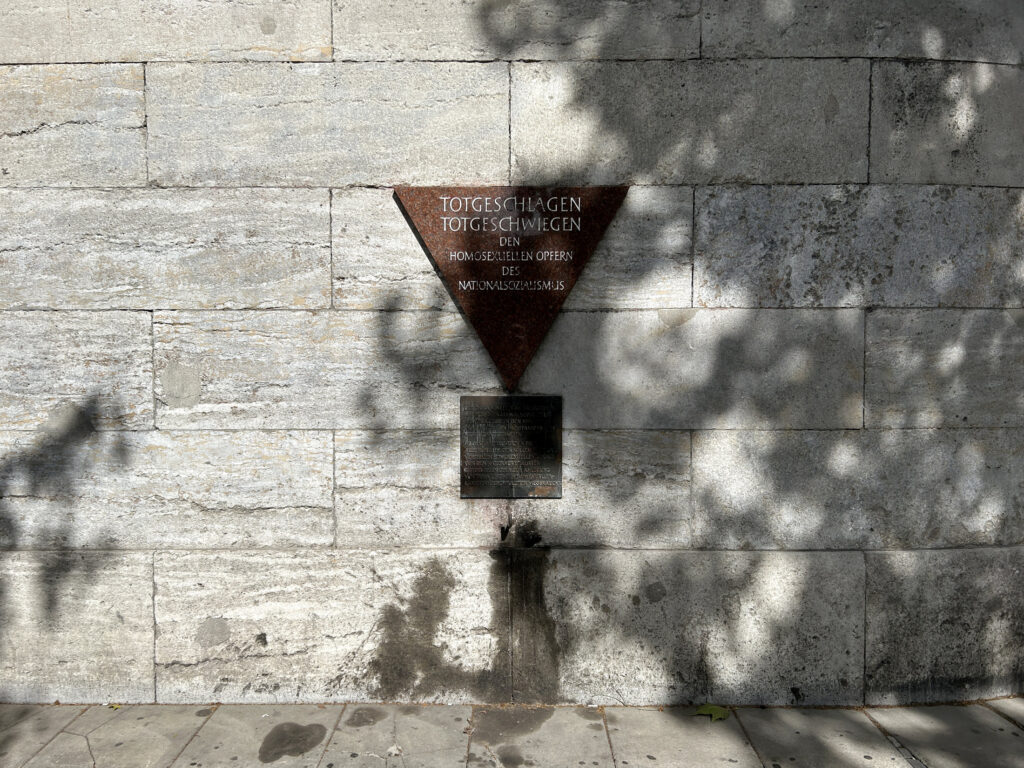
Photo by Chrissie Sternschnuppe@Flickr. CC BY-SA.
Homosexuality had been illegal since the formation of the German Empire in 1871 due to the infamous Paragraph 175 of the Penal Code.
What was Paragraf 175?
Section 175 comes from the Penal Code of the German Empire and continues the sodomy laws from Prussia. The rule banned sex between men.
In 1935, the Nazi regime expanded the paragraph so that men could be punished for any “lewd behavior”. The rule was so vague that people could be punished without even touching each other.
In East Germany, Paragraph 175 was amended in 1950 to revert to its form before 1935. It was made even less strict in 1969 and 1973, focusing on consent between the people involved. The paragraph was abolished in 1988.
In West Germany, the Nazi version of Paragraph 175 stayed until 1994, after Germany reunited, but then the paragraph was finally abolished.
In Berlin in particular, enforcing Paragraph 175 was largely ignored.
The police kept an extensive register of the city’s gay men, which they used to expose blackmail and corruption among rich travelers who came to Berlin and paid for sexual services from the men.
It allowed gay men to live openly, but it also gave the Nazis a list of many gay men when they came to power in 1933.
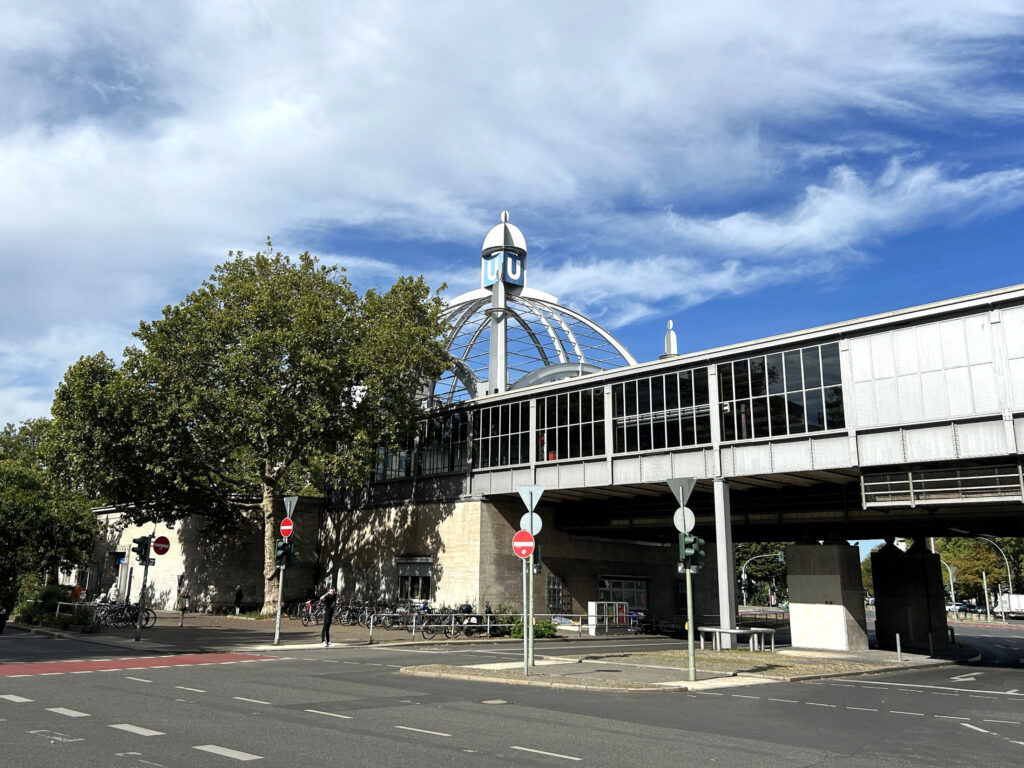
Photo by Chrissie Sternschnuppe@Flickr. CC BY-SA.
Gays and lesbians did not fit into the ideal of the “Germanic master race” in the Third Reich. Nightclubs and bars were closed, and police records were used to track down the many gays and individual lesbians who had been in contact with the police.
They were among the first to be sent to concentration camps in Germany as early as 1933.
In the concentration camps, prisoners were marked with inverted triangles in different colors depending on the category for which they had been captured.
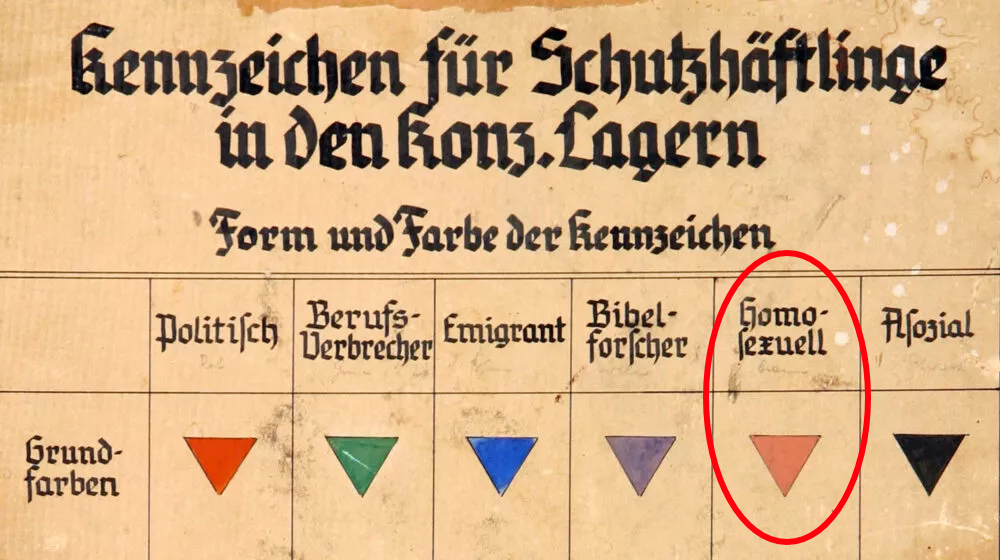
The pink triangle represented homosexuals, and the triangle made them stand out in the concentration camps. Because of this, they were not only subjected to hard labor and torture by the SS guards, but also discrimination and beatings from their fellow prisoners.
In 1935, paragraph 175 was further tightened so that all “lewd behavior” between men could be punished. This led to more imprisonments and more torment in the concentration camps.
It is estimated that up to homosexuals were imprisoned in concentration camps in Germany between 1933 and 1945. Of these, between and died or perished.
The pink triangle memorial at Nollendorfplatz is for them.
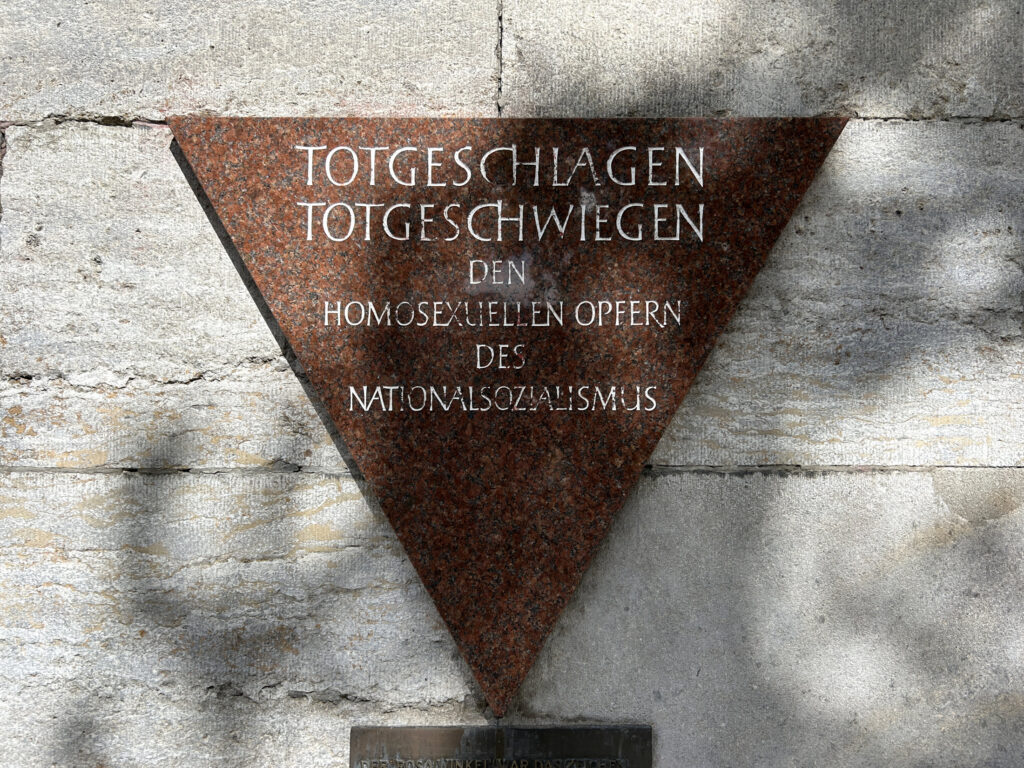
Photo by Chrissie Sternschnuppe@Flickr. CC BY-SA.
The pink triangle memorial reads: TOTGESCHLAGEN TOTGESCHWIEGEN which means beaten to death, silenced to death.
The latter refers to the fact that even though Nazi Germany came to an end in 1945, gay people continued to be persecuted. Some were even transferred directly from concentration camps to prisons immediately after World War II.
It was not until 1994, after the reunification of East and West Germany, that Paragraph 175 was completely abolished.
Location:
On the wall of the Nollendorfplatz U-Bahn station
10777 Berlin
Family friendly: Yes
Price: Free
Experiences nearby
Related articles

Stolperstein: Who Is Käte Rogalli?
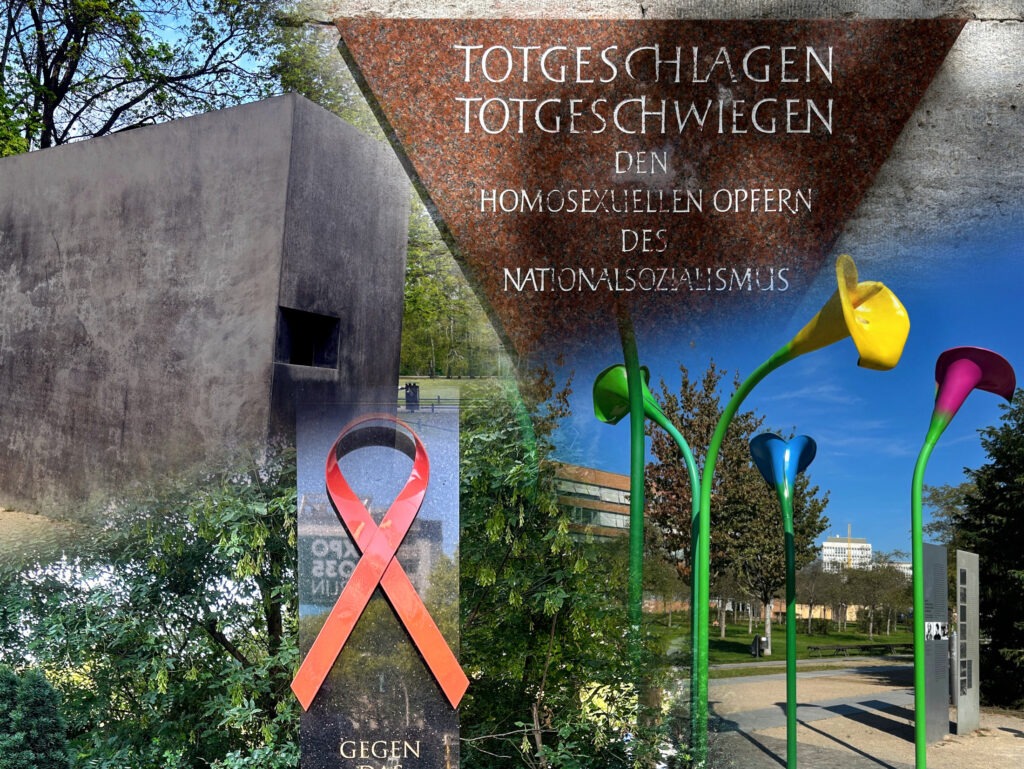
LGBT+ Memorials in Berlin to Visit During Pride Month