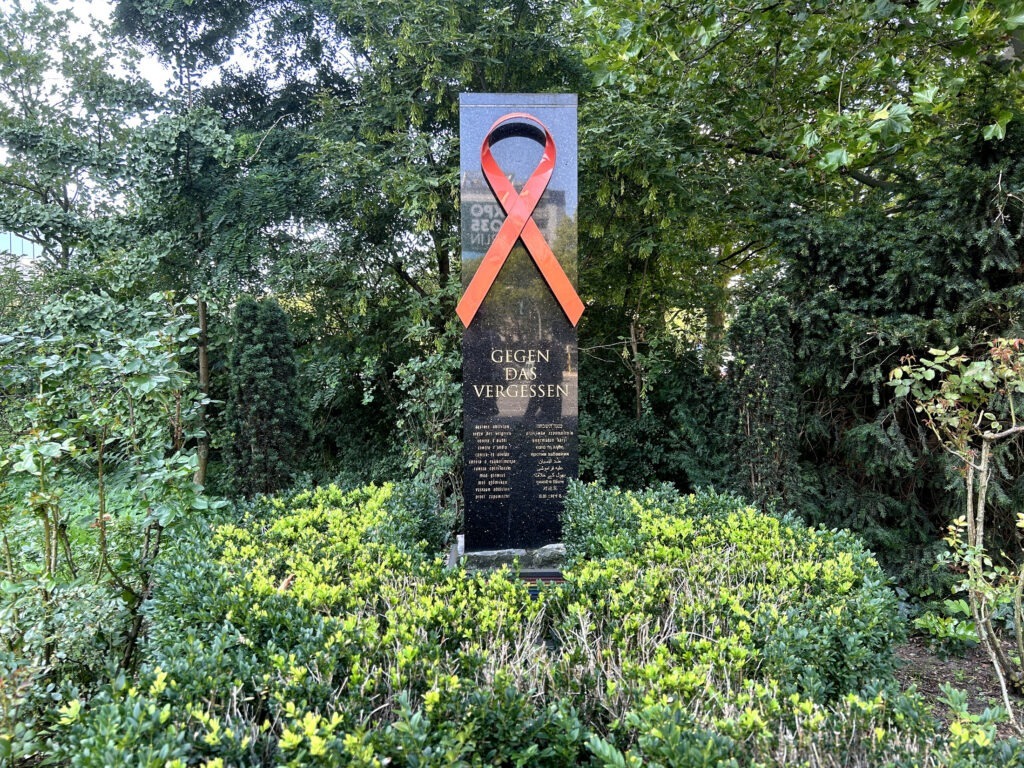
Since the 1990s, the AIDS Memorial in Berlin has raised awareness in 22 languages about those who have died of AIDS and those living with HIV today.
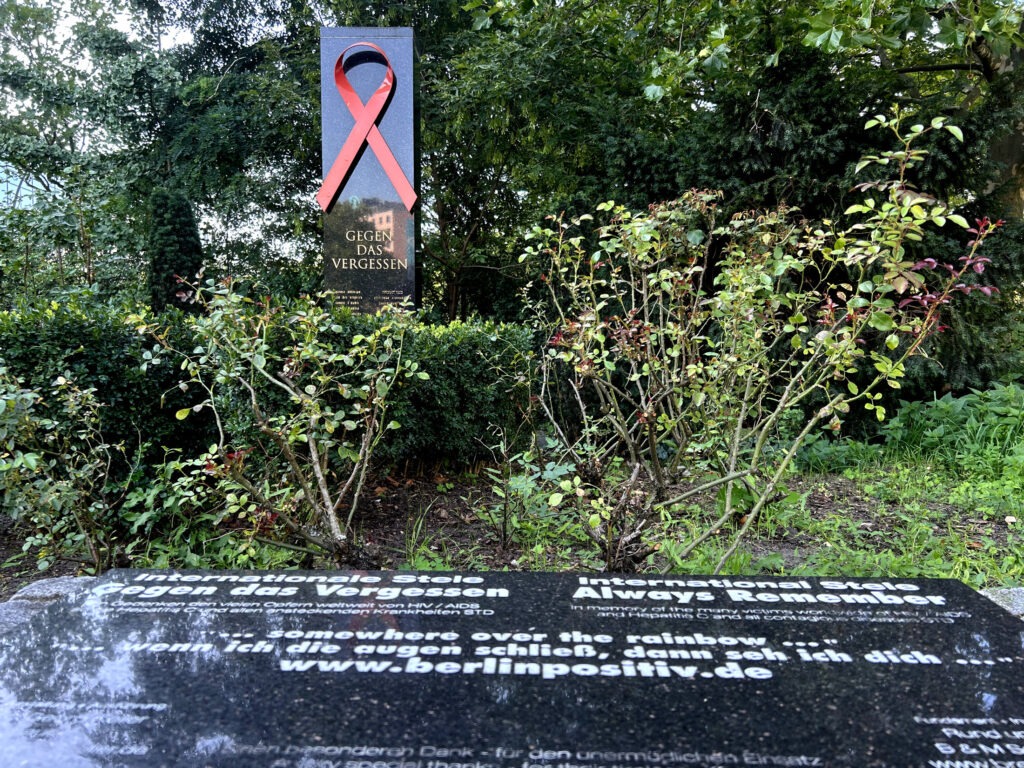
The AIDS memorial stele originated as a red metal ribbon that was originally installed at the Urania intersection in the 1990s, a period marked by a sharp increase in AIDS-related deaths.
In the early 2000s, the BerlinPositive association received a sponsorship from the city of Berlin to build a bigger memorial. Sculptor and stonemason Bernhard Keller was chosen to make the new memorial.
It was finally inaugurated on November 30th, 2010, a day before World AIDS Day.
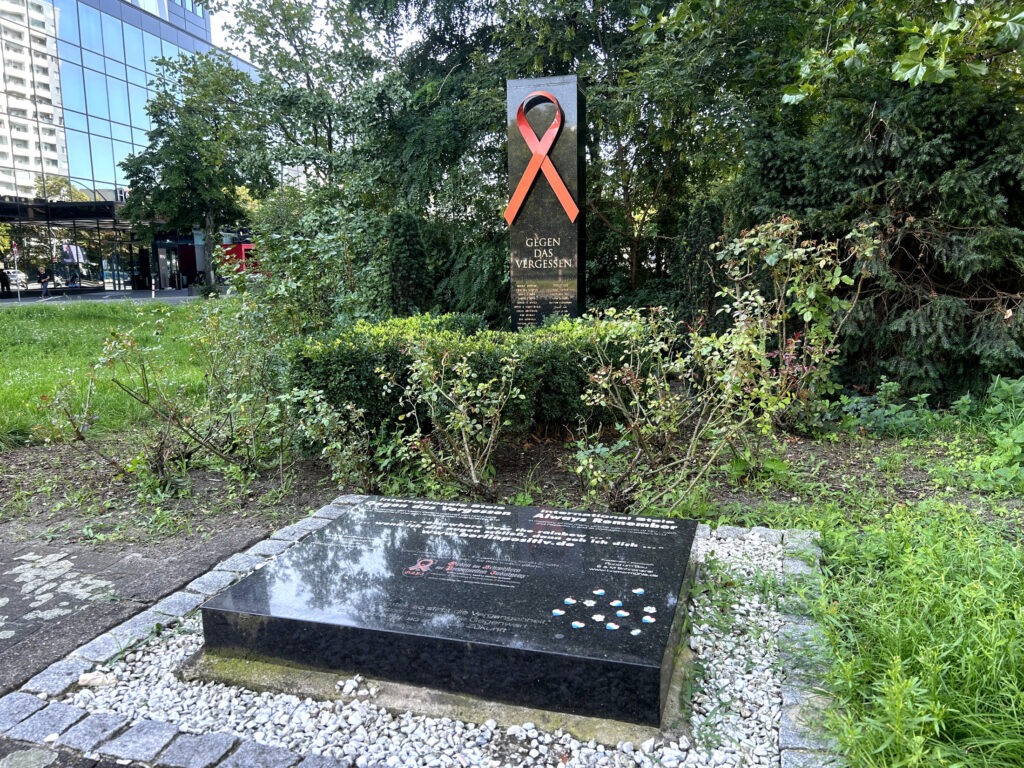
Photo by Chrissie Sternschnuppe@Flickr. CC BY-SA.
The stele stands where the original red metal ribbon memorial was, at the start of the Regenbogenkiez in Schöneberg. This makes it a part of the neighborhood’s culture and daily life.
The stele itself bears the inscription ‘AGAINST OBLIVION’ in 22 different languages. It serves as a reminder that HIV is still a threat and can infect anyone regardless of sexual orientation, religion, or ethnicity.
The different languages also signal that in many countries there is no access to life-saving HIV medication, and that people living with HIV are often stigmatized and marginalized.
The AIDS memorial stele is also a memorial against stigmatization and exclusion and for diversity and acceptance.
Location:
Intersection at Kleiststraße/Martin-Luther-Straße
Berlin
Family friendly: Yes
Price: Free
Experiences nearby
Related articles
Soviet War Memorials in and around Berlin
LGBT+ Memorials in Berlin to Visit During Pride Month